

Duplicate invoice detection: evidence, exceptions and review
A practical guide to detecting repeated submissions without blocking legitimate supplier charges.
Qonnex Editorial · Business operations and AI consulting

Duplicate invoice detection compares an incoming invoice with existing records to identify a possible repeated obligation. A useful check combines supplier identity, invoice identifiers and transaction context, then sends ambiguous matches to an accountable reviewer. A flag is evidence to investigate; it does not prove fraud or justify deleting a record.
Define what counts as the same obligation
Start with the business question: have we already recorded or paid this supplier's request for the same goods or services? Identical files are one case. A supplier can also resend the same invoice with a new filename, adjusted formatting or a corrected reference. Conversely, two invoices can share an amount and supplier while covering different billing periods.Document which records are compared: incoming submissions, accounting entries, open invoices and settled items. Include source-system identifiers and legal entity. An isolated inbox check cannot see a duplicate entered elsewhere unless the relevant record is available. Define how credits, voids and corrected invoices affect the comparison.
Oracle's duplicate-invoice check documentation describes a configured check combining supplier, invoice type, amount, currency and date, beyond invoice-number matching. This is an example of multiple matching attributes, not a statement that every ERP applies the same rules or that Qonnex provides a particular connector.
This guide owns duplicate evidence and resolution. Use the invoice approval workflow guide to define who can approve an obligation, and the invoice matching guide for comparing invoices against purchase orders and receipts.
Normalize values without losing the original
Create a comparison record with the supplier's stable internal identifier, original invoice number, normalized comparison number, invoice date, currency, amount, document type and source reference. Keep the original values. A reviewer must be able to understand whether a match came from the document or a transformation.Normalization can trim surrounding spaces and standardize case, but removing punctuation or leading zeros may merge genuinely different identifiers. Agree the rules with the finance owner and test known examples. Preserve both “INV-010” and the comparison key rather than overwriting the invoice number.
A filled synthetic example shows the tradeoff. Suppose supplier SUP-042 sends invoice reference “ inv-0010 ” and the existing entry is “INV-0010”, both in USD for the same obligation. Trimming surrounding spaces and standardizing case creates the comparison key “INV-0010” while preserving both original references. That is a candidate with an explainable transformation, not permission to discard a submission.
Now compare “INV-0010” with “INV-010”. Removing every leading zero and punctuation mark could collapse distinct references into the same key. Unless the supplier's numbering convention and finance policy establish equivalence, keep them distinct and use any broader similarity only to retrieve candidates for review. Record the normalization rule version, so the team can reproduce a decision after the rules change.
| Synthetic source value | Conservative comparison treatment | Risk to test |
|---|---|---|
| “ inv-0010 ” | Trim outer spaces, uppercase if approved, preserve original | Case convention may vary by supplier |
| “INV-010” | Preserve the digits and hyphen | Aggressive zero removal can merge separate references |
| “0010” from a different supplier | Keep a different supplier key | A shared number does not establish one obligation |
Supplier identity needs similar care. Trading names, duplicate supplier master records and different legal entities can complicate comparisons. Resolve supplier identity using approved master-data rules; a matching name alone is weak evidence. Missing currency or an unreadable invoice number should enter an exception path rather than become a wildcard that silently matches everything.
Layer exact checks and candidate searches
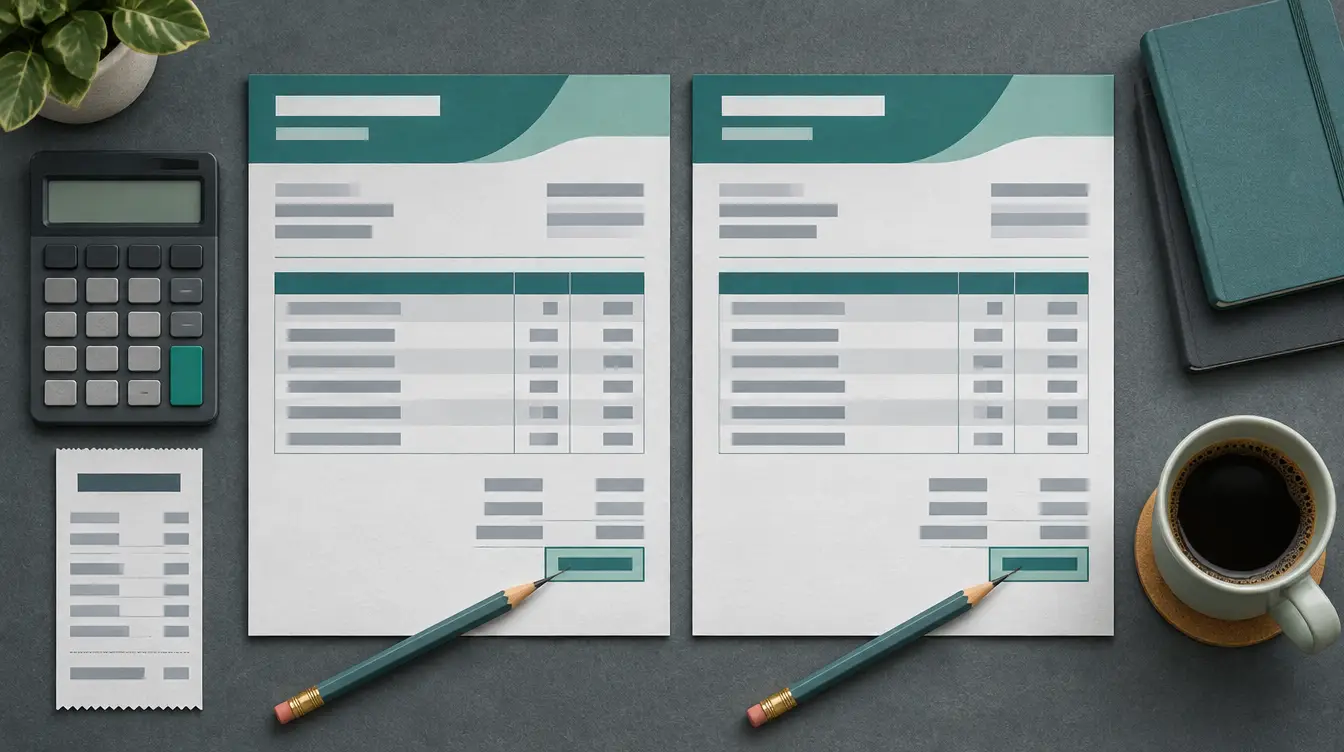
Use a strict check for strong repeated identifiers, then a broader candidate search for cases the strict rule may miss. For example, a synthetic test might compare the same supplier, normalized invoice number and currency first, then retrieve candidates with the same supplier, currency and amount within a finance-approved date window. These are illustrative rules, not production defaults.Broader searches should return a reason and the records being compared. Show which fields agree, which differ, the status of the earlier invoice and links to both originals. Similarity scores can help order a review queue, but they do not explain an obligation on their own. Do not auto-reject an invoice merely because a fuzzy score exceeds an arbitrary threshold.
Check before posting and define how to handle concurrent submissions. Two copies arriving together can both look new if the system checks only previously committed records. Coordinate checks and writes using the controls available in the destination system, and retain an intake identifier so retries do not create extra entries. Ask IT to verify the actual transaction and retry behavior in a test environment.
Configuration also determines the comparison boundary. Microsoft's vendor invoice dates documentation explains that when its fiscal-year duplicate rejection option is selected, posting date is used in the duplicate check. This product-specific behavior is a reason to test date and year boundaries in the actual system, rather than assume that an invoice-date search and the posting control are identical.
Resolve edge cases with a recorded reason
Recurring subscriptions often repeat amounts. Compare service period, contract reference and invoice identifier before deciding they are duplicates. Installments may refer to one purchase order but represent separate obligations. A credit note offsets or corrects an invoice; it is not automatically another copy of the charge. A corrected invoice may replace an earlier version and require explicit linkage rather than silent deletion.For every flagged pair, let the reviewer choose a controlled outcome: confirmed duplicate, legitimate separate charge, replacement pending confirmation or insufficient evidence. Specify who can contact the supplier, who can release a hold and who can correct accounting records. Record the explanation and supporting evidence with the decision.

Retain the submission history even when a duplicate is confirmed. If the earlier invoice is already settled, route the issue to the finance owner for reconciliation and any supplier follow-up under established procedures. Do not treat a detection rule as authority to reverse an entry or initiate a payment recovery.
Measure useful detections and missed cases
Build a labeled evaluation set containing confirmed duplicate pairs and legitimate lookalikes. Include resubmissions, punctuation variations, changed amounts, missing identifiers, multiple currencies, recurring bills, credits and records from different legal entities. Keep test labels traceable to the finance review that established them.Track confirmed duplicates among reviewed flags, legitimate invoices unnecessarily held, cases unresolved after review and confirmed duplicates found later that the check missed. A large number of flags can mean a noisy rule rather than a strong control. Any estimate of money prevented from being paid should distinguish flagged value, confirmed duplicate value and actual avoided disbursement; do not add them together.
Use the following synthetic test cases as a starting worksheet. The expected outcome distinguishes candidate generation from the human decision; finance must confirm the labels against original records.
| Case | Candidate behavior to test | Human decision and evidence |
|---|---|---|
| Same PDF resent with a new filename | Retrieve the existing invoice despite a changed file name | Confirm the same obligation from both originals and retain the resubmission history |
| Same supplier and amount, altered reference punctuation | Retrieve a possible near match with a normalization reason | Compare reference, goods or service period and prior status before confirming |
| Monthly subscription with equal amount | May return a candidate under the broader rule | Release as separate only after checking distinct billing periods and references |
| Credit note referring to an earlier invoice | Identify a related record without treating it as another charge | Confirm document type, sign and linkage; route accounting treatment to finance |
| Two copies arrive simultaneously | Detect or prevent the repeated write under concurrent processing | Retain both intake IDs and verify only the authorized accounting entry remains |
| Same number and amount, different legal entity | Respect the configured entity boundary and show related context where permitted | Confirm which entity owes the obligation; do not merge solely by text similarity |
Save the rule version and comparison record for every case, not only the cases that passed. If a rule change reduces flags, check whether it also loses known duplicates. Have someone review a sample of unflagged items so measurement is not limited to the queue the system chose to show. Where the sample is too small or labels are incomplete, report that limit rather than presenting a precise detection rate.
Before production, agree how an alert reaches the payment or posting process and how long the responsible team has to resolve it. A dashboard that nobody checks is not an effective operating handoff. Test absence cover, escalation for overdue items and the authorized way to resume work after a resolved hold. Keep supplier-facing explanations factual and based on the records being compared.
Start with alerts or holds under existing authority, inspect outcomes and adjust one rule at a time. Monitor missing data and review backlog as well as matches. Use the invoice automation implementation guide for the broader rollout or Qonnex operational efficiency to scope the handoff. The goal is a defensible decision with an owner and evidence, not a promise of zero duplicate payments.